Cut-Resistant Materials
Razor-sharp skate blades, a track packed with competitors, and the battle for hundredths of a second—that's the daily grind of short track speed skating. Before we discuss wetsuit cuts and styles, let's start with what truly determines safety: the material.
How we test and classify material resistance
Not every material described as "uncuttable" offers the same level of protection. That's why we stress-test every batch of fabric, measuring the force required to cut the fiber with a blade similar to an ice skate blade.
The force required to cut through the material


Why our material stands out from others
Cut protection is only half the equation – how the material performs in motion, during training, and after dozens of washes also matters.
Resistance without stiffness
Uncuttable fibers woven into a flexible matrix provide protection comparable to industrial materials, without sacrificing the freedom of movement needed in deep turns.
Breathability and moisture management
Despite the dense weave that protects against cuts, the material remains breathable and effectively wicks away moisture during intense exercise.
Durability and abrasion resistance
The protective properties of the material do not disappear after the first training sessions - the fabric retains its resistance class even after many seasons of use.
Property Profile in Numbers
Evaluation of key fabric parameters on a scale of 0–100% and maintained cut resistance depending on the number of washing and use cycles.
Material Property Profile
Durability of protection during operation
Two layers, one job
Protection and comfort work together – each fabric layer has a different function within the material structure.
The technology described above is not reserved for one model – we use it in the entire range of short track racing and training clothing, where the risk of contact with the skate blade is real: in racing suits and in Cut-Resist thermal underwear worn under the suit.
Where do we use Cut-Resistant material?
Non-cutting inserts are placed where the risk of contact with the skate blade is greatest: legs, arms, torso.
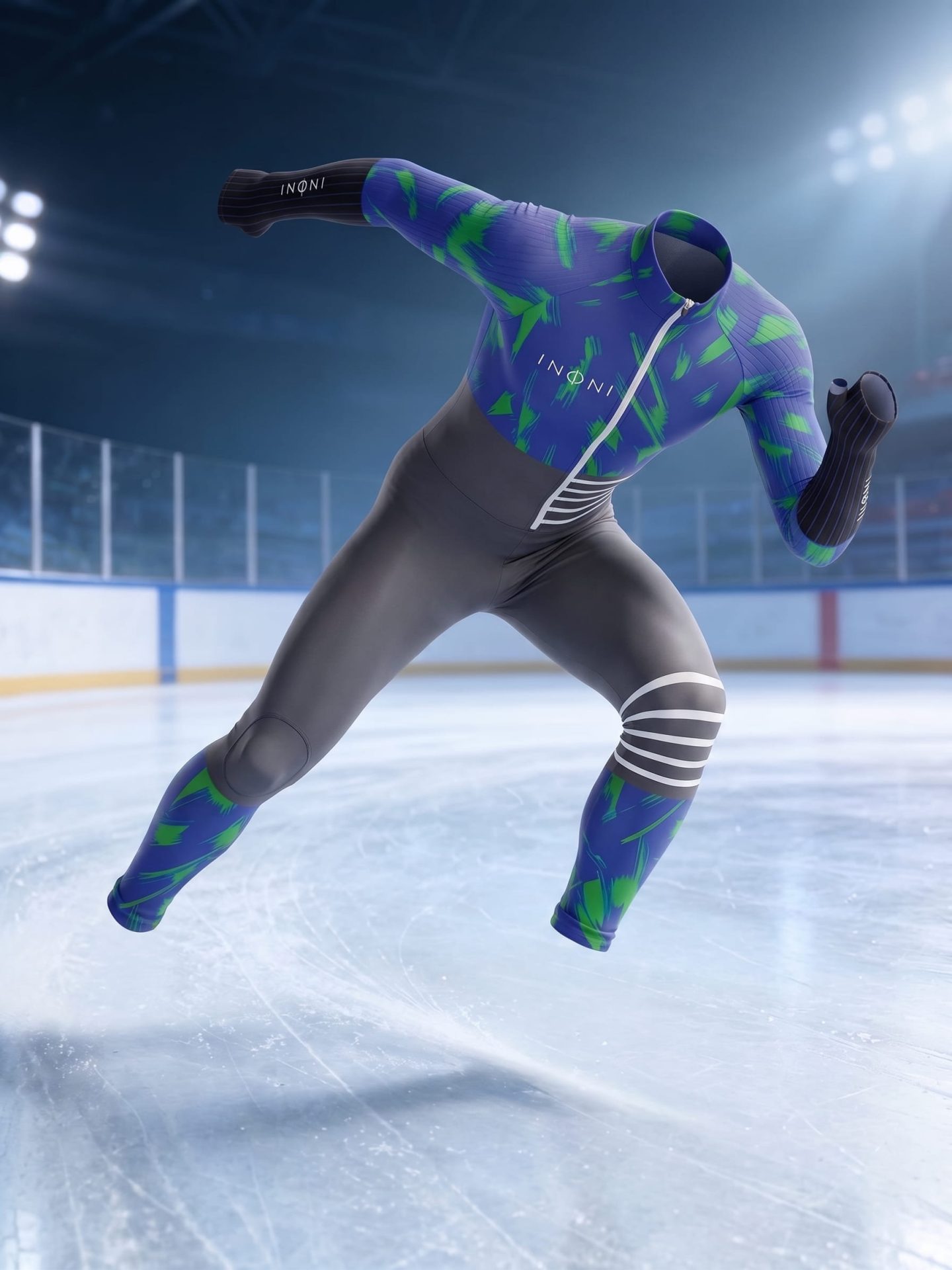
INONI Short Track Suit with Cut-Resistant Material
Starting suits
Uncut inserts in the highest risk zones: legs, arms, torso.
Cut-Resist thermal underwear
An additional protective layer worn under the racing suit for training and competition.
Protection goes beyond the suit
The shins and forearms are most exposed to contact with the skate during falls and collisions on the track - so we have extended protection to these body parts as well, while maintaining the same level of material certification.

Shin protection
A flexible protective sleeve made from the same uncut fabric as the suit. It protects one of the most vulnerable areas during falls and contact with the skate without restricting movement.

Forearm protection
A protective forearm sleeve worn under the outerwear. It protects the sensitive area during blocks, falls, and contact with the ice or other players.

Neck and collarbone protection
An additional cover made of the same uncut fabric, worn under the suit in the neck and collarbone area.


Protective suit - thermal underwear
A full-body thermal suit, made entirely of uncut knit fabric from wrists to ankles. It serves as a base layer of protection worn under racing gear, providing full-body protection where other accessories end.
A material that protects you even before you feel threatened.
Contact us to learn more about Cut-Resistant technology or to order dedicated cut-resistant equipment for your club.